
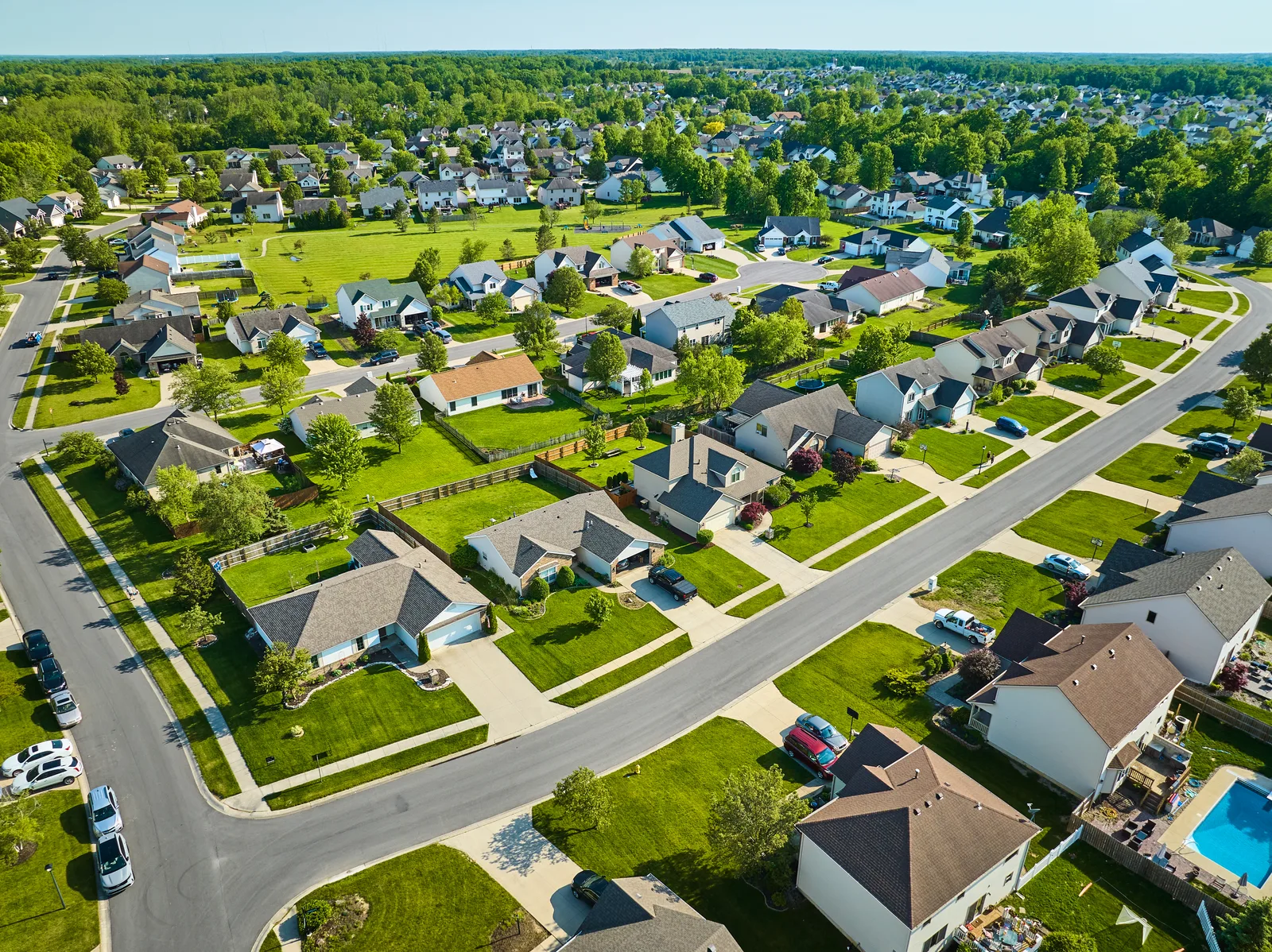
Akron houses were built for a bigger city
Most Akron homes are older than the people selling them. The median house in the city was built in 1954, and about a third went up in 1939 or earlier, according to the Census Bureau’s 2020-2024 survey.
That age comes from the rubber years. B.F. Goodrich arrived in 1869, Goodyear in 1898, Firestone in 1900 and General Tire in 1915, and Akron grew into the “Rubber Capital of the World.” The population peaked at 290,351 in 1960. By 2020 it was 190,469, and the 2020 census counted about 10% of the city’s 92,517 housing units as vacant.
For a seller, that history shows up as:
- Original wiring, plumbing and furnaces in houses that have changed hands several times.
- Company-era neighborhoods where many homes came from mail-order plans, so the same floor plan may repeat for blocks.
- Vacant or half-used houses left behind after a parent moves out or dies.
If your house needs that kind of work, the pages on selling a house that needs work and selling a house with old wiring go into the details.
All 24 Akron neighborhoods
Akron fixed its official neighborhood map in 2017, building on one first drawn in 2000. It has 24 neighborhoods, and each has its own page here covering the streets, housing and local issues:
Sherbondy Hill was called Lane-Wooster before the 2017 map, and West Hill became its own neighborhood that year, so older deeds and listings may use different names.
City rules that can come up when you sell in Akron
Akron has no point-of-sale inspection, but three city systems often touch a sale.
- Rental registration. Every rental unit must be registered with Housing Code Enforcement, at $25 per unit (2026 fee). Akron started in 1997 and says it was the first Ohio city to do so. The Akron rental registration guide covers what a landlord who is selling needs to have in order.
- Housing code orders. The Housing Compliance Division enforces the city’s Environmental Health Housing Code. Open orders don’t stop a sale, but the buyer needs to know about them. See Akron housing code enforcement.
- Demolition cases. Under Akron Codified Ordinance 150.051, a complaint leads to written notice and a hearing before the Housing Appeals Board, which can order repair, vacating or demolition. Demolition costs are assessed to the property. Vacancy, ignored orders, tax delinquency and unregistered rental status are common factors. The Akron demolition order guide explains the timeline.
If you’re facing any of these, the page on selling a house with code violations explains how an as-is sale handles them.
Half of Akron rents, and landlords sell too
About half of Akron’s occupied homes are rented. The 2020 census put it at 50.2% renter-occupied, and only 67% of the city’s housing is single-family detached, so doubles and small multi-unit buildings are common.
Selling a rental here usually means one of three things: keeping the tenant through closing, waiting out a lease, or ending a tenancy under Ohio’s eviction rules. The pages on selling a house with tenants and selling a duplex or multi-family property walk through each one. We buy with tenants in place, and we’ll want to see the lease and rent roll during the walkthrough.
When listing your Akron house is the better move
If your Akron house is updated and you have time, listing it with an agent will likely net you more than any cash offer. Buyers pay retail for move-in-ready homes in Akron’s stronger neighborhoods, and a cash buyer’s number has to leave room for resale costs.
A direct sale tends to fit better when:
- The house needs a roof, a furnace or a full cleanout.
- It’s tied up in an estate, a divorce or a tax problem with a deadline.
- It has tenants or code orders that would scare off a financed buyer.
The Akron housing market guide has current prices, and selling options compares the routes side by side. We’ll tell you plainly if listing looks like the better fit for your house.
Downtown courthouses handle Akron’s estates and foreclosures
Because Akron is the county seat, the offices that handle inherited and distressed property are downtown. The Summit County Probate Court is at 209 S. High St. The county sheriff runs foreclosure sales online, and the Fiscal Office handles delinquent taxes.
Those county-wide steps, from probate to sheriff sales to the $4 per $1,000 conveyance fee, are explained on the Summit County page, so this page doesn’t repeat them.
If you’d like a number on your Akron house, request a written offer and Bob will set up the walkthrough.