
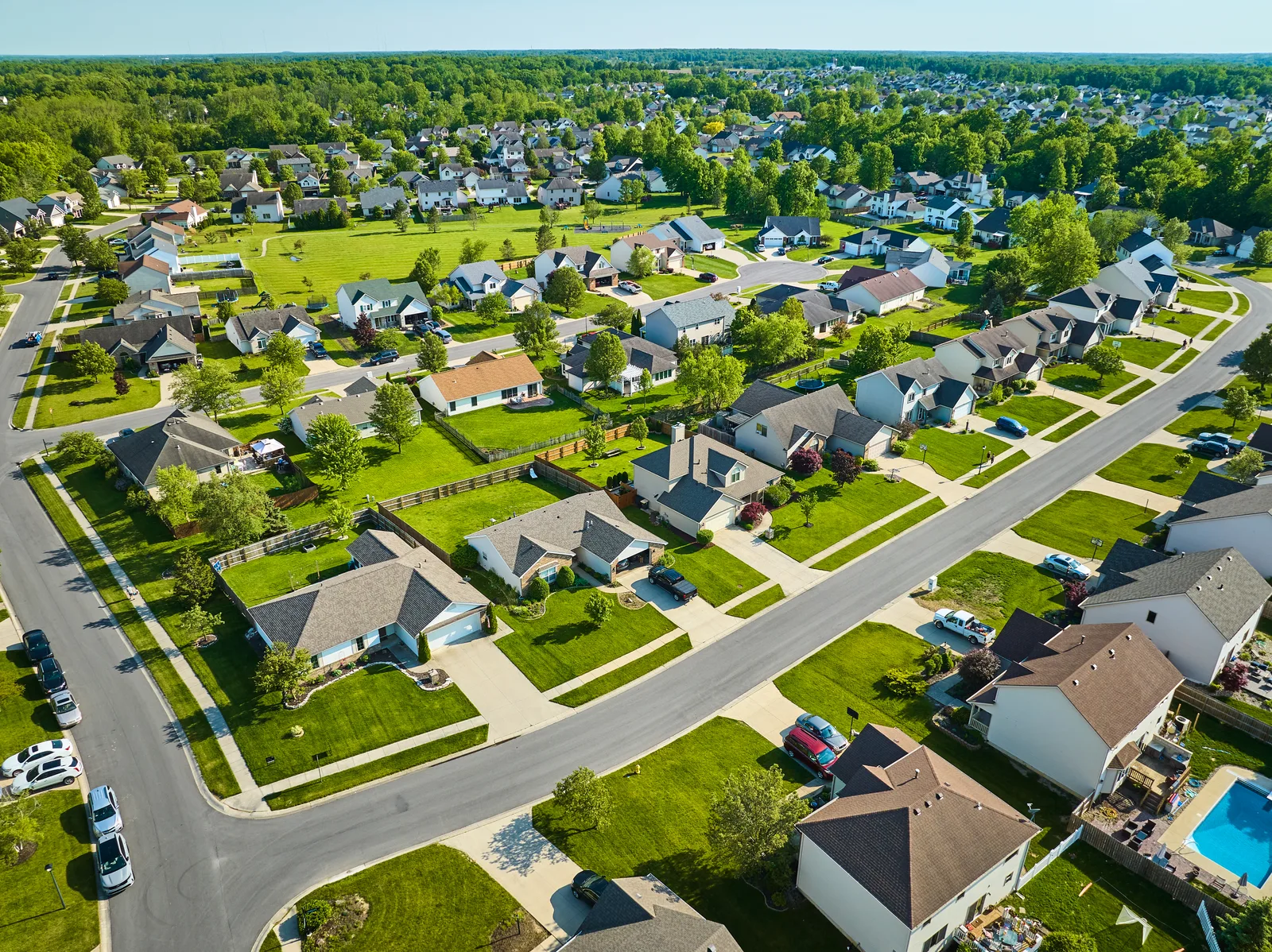
A crossroads with old subdivisions behind it
Wallhaven is defined by an intersection. West Market Street, West Exchange Street and Hawkins Avenue meet here, and that junction carries grocery stores, banks, restaurants and the original Swensons drive-in, open on South Hawkins since 1934. Roughly 5,000 people live on the neighborhood’s nearly two square miles, and shoppers from Highland Square, Fairlawn Heights, Copley and Fairlawn pass through daily.
Step off the main roads and the housing is older and quieter. Wikipedia’s neighborhood article says Wallhaven developed mostly between the early 1920s and the mid-1930s and names three subdivisions residents still take pride in:
| Subdivision | Where | Notes from the source |
|---|---|---|
| Sunset View | Storer and Delia to Exchange and Elmdale | Large older houses, built on the grounds of a sanitarium of the same name; the O’Neil mansion of General Tire’s founder is at its center |
| Castle | Around Castle Boulevard, off West Market | Castle-like markers at the entrances; homes from the mid-1920s to mid-1930s |
| Hunter’s Lodge | Mull to Hawkins, Exchange to Delia | Land once used by prominent families to ride and hunt; centered on Hunter’s Lodge Park |
The size ranges and price figures in that article are dated, so we haven’t repeated them.
There’s a fourth named pocket. During the 2017 map redesign, a resident asked the city to recognize Kemppel Village, the original subdivision behind Ken Stewart’s Grille around White Pond Drive and Frank Boulevard, as its own neighborhood. The city kept it inside Wallhaven.
Millionaires Row and the park
West Market Street from Portage Path to Elmdale was once called Millionaires Row. Mansions there became private homes, offices and schools, including Our Lady of the Elms. Several nearby houses are on the National Register, among them the Charles Willard Seiberling House at 1075 West Market, the Byron R. Barder House at 1041 and the Stacy G. Carkhuff House at 1225.
Hardesty Park, tucked behind Westgate Plaza, hosts the Akron Arts Expo and family gatherings, and Anne T. Case Community Learning Center is in the neighborhood. A shop owner on Ayers Avenue said the area has grown fast in 14 years and worries about losing green space to development.
Jason Segedy, the former city planning director who redrew Akron’s map, lives in Wallhaven himself.
Selling a 1920s or 1930s Wallhaven home
Houses from this era in a convenient, established neighborhood usually attract retail buyers, and a well-kept one will often bring more listed than sold for cash. We’ll say so if that’s your house.
Where a direct sale helps:
- an estate with a house nobody has updated in decades; see selling an inherited house
- original wiring, an old boiler, or a roof at the end of its life, covered in selling a house that needs work
- a rental on one of the busier blocks; check the city’s rules in the Akron rental registration guide
Want a number to set against an agent’s estimate? Request a written offer.