
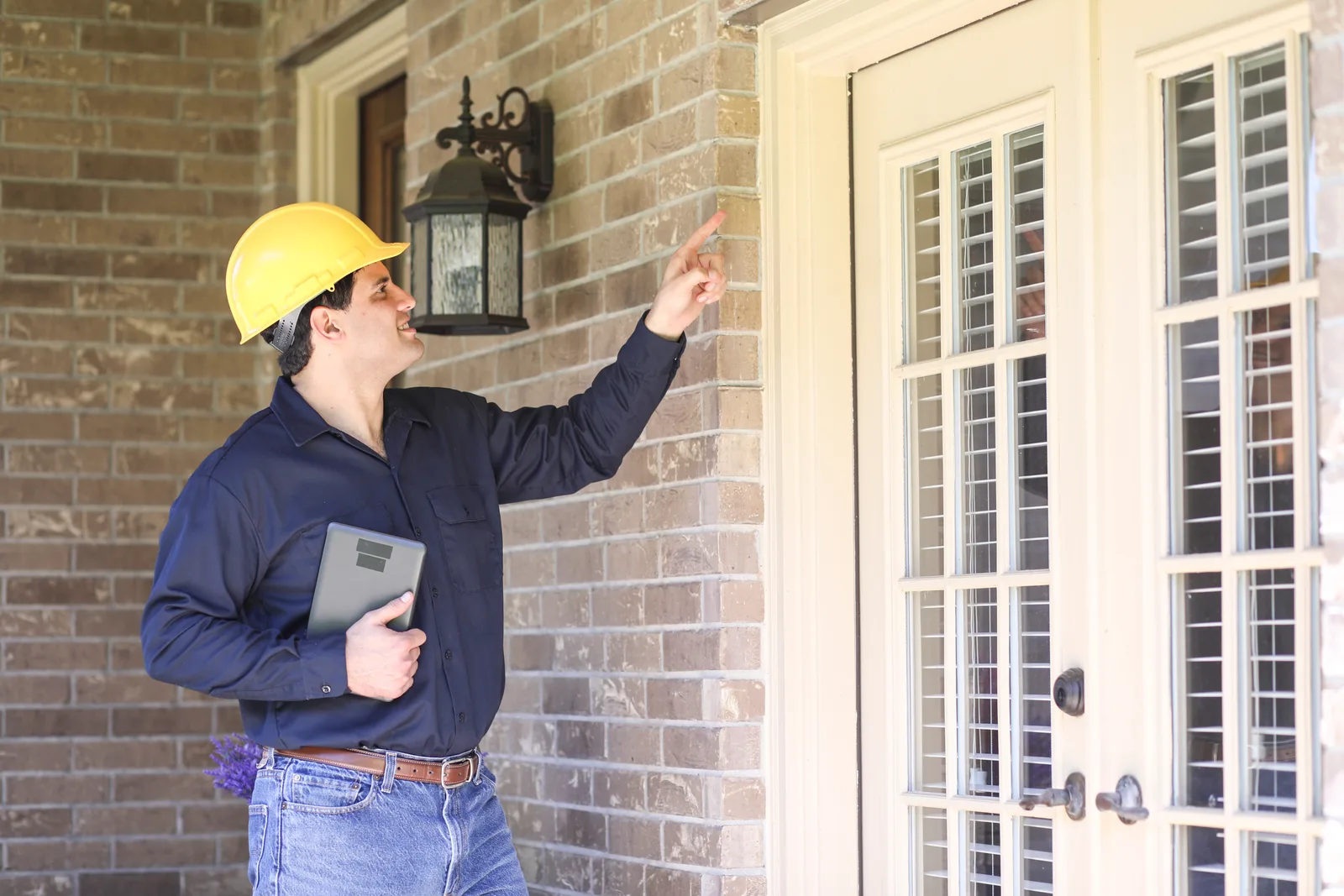
Fix it first or sell it as it is
Fixing first pays off when the repair is modest, you have the cash and the time, and the finished house will sell to a buyer with ordinary financing. Selling as-is makes more sense when the repair list is long, the work needs permits and licensed trades, or you can’t carry the house for the months a renovation takes.
A quick way to test it: get a real quote for the work, add a cushion for what turns up once walls open, add the months of taxes, insurance and utilities while the work happens, and compare that total with the price difference between the house fixed and the house as-is. If the gap is thin, the repair isn’t earning you much.
Here is how that can play out, with made-up round numbers. A roof replacement is quoted at $14,000. You add $2,000 for rotted decking the roofer might find, and $1,500 for two extra months of taxes, insurance and utilities while you wait for the crew. If a new roof raises the likely sale price by $15,000, you have spent $17,500 to gain $15,000. If it raises the price by $25,000 because buyers’ lenders wouldn’t touch the old roof, the repair pays. Run the numbers for your own quotes before you commit.
Older housing is the norm here, which is why so many owners face this. The Census Bureau’s 2020-2024 estimates put the median year built at 1954 in Akron and 1947 in Canton, with about 34% of Akron’s homes and 41% of Canton’s built in 1939 or earlier. Original wiring, galvanized pipes, slate or layered roofs and stone foundations come with that age.
Repairs that stop ordinary buyers
Some problems don’t just lower the price. They stop the financing. Lenders and appraisers want a house that is safe and sound, and government-backed loans are strict about it; see FHA appraisal repair requirements.
The repairs most likely to sink a financed sale:
- Structure. Bowed basement walls, settling and cracked foundations. See selling a house with foundation problems.
- Roof. Active leaks or a roof at the end of its life; see selling a house with roof damage.
- Electrical. Knob-and-tube or undersized service, covered on old wiring and knob and tube.
- Heat and water. A dead furnace, a failed sewer lateral or a septic system that won’t pass.
When a buyer’s inspection turns up one of these, the deal usually becomes a renegotiation or ends. Our page on a house that failed inspection covers what to do if that has already happened.
What Ohio’s disclosure form asks about condition
Most Ohio home sellers must give the buyer the state Residential Property Disclosure Form, which is based on what you actually know. The Department of Commerce version effective June 2022 asks about:
| Section | What it covers |
|---|---|
| Water supply and sewer | Leaks, backups, the type of system, last septic inspection |
| Roof | Previous or current leaks, with repairs in the past 5 years |
| Water intrusion | Basement or crawl space water, moisture damage, mold inspections |
| Structure | Foundation movement, cracks, settling, and fire or smoke damage |
| Insects | Termites or other wood-destroying insects |
| Mechanical systems | Electrical, plumbing, heating, air, sump pump, fireplace and more |
| Hazards | Lead paint, asbestos, urea-formaldehyde insulation, radon |
Selling as-is doesn’t erase what you know. For homes built before 1978, federal law separately requires a lead-based paint disclosure and the EPA pamphlet, according to HUD. Read more about the Ohio disclosure form.
Point-of-sale rules in Summit County towns
Most of Northeast Ohio has no city inspection at sale, but a few Summit County communities do. A 2025 title-agency list shows exterior point-of-sale inspections in Macedonia, Northfield village and Twinsburg. Separately, Summit County Public Health requires an inspection before transfer of any home with a septic system or private well, though the result doesn’t block the transfer.
Akron, Stow, Cuyahoga Falls, Green and most other towns on that list had no general point-of-sale program. Check the point-of-sale inspections guide for your town, and confirm with the city before you sell.
How we price a house that needs work
Every repair goes into the number, and we show you how. Bob walks the house with you, usually in 15 to 20 minutes, and separates what truly has to be replaced from what can be repaired, and what isn’t a big deal at all. That difference matters: a furnace that needs a part is not a furnace that needs replacing.
If the house would sell well after a small fix, we’ll tell you so, and you can decide whether that’s worth your time. For the full picture of the as-is route, read how to sell a house as-is in Ohio, then ask for a written offer when you want to compare.
