
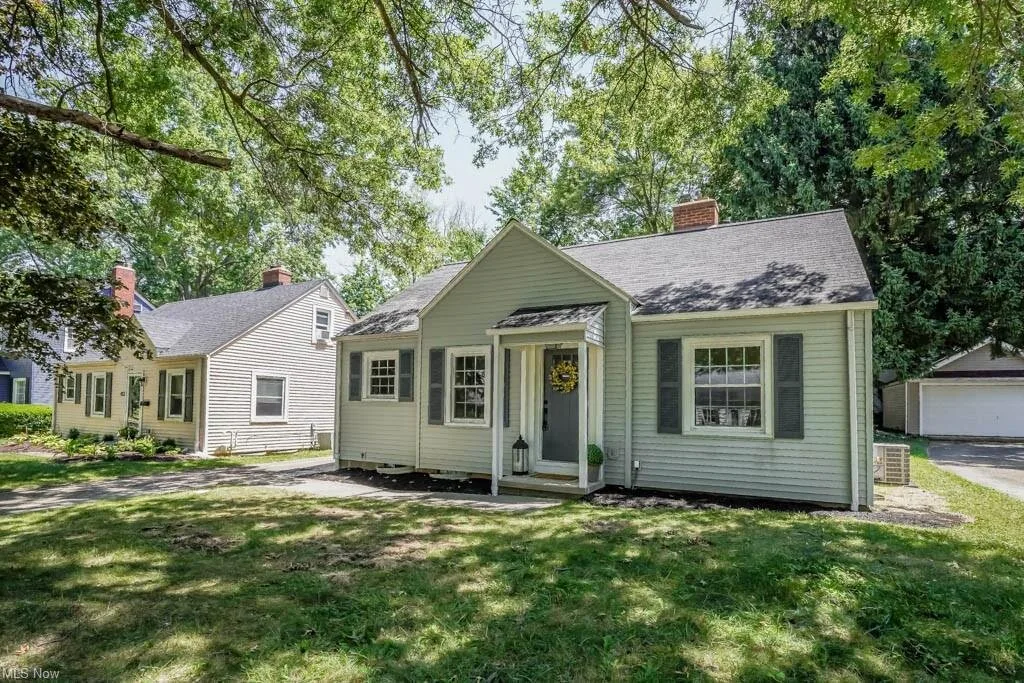
From farm township to city in two years
Green turned from a farm township into a city in about two years. Green Township was created in 1809 as part of Stark County and moved to Summit in 1840. It became the Village of Green at the start of 1991 and was declared a city in 1992, with John Torok as its first mayor.
Around 1900 the township was mostly farmland with five small settlements, Greensburg the most notable. Farmers began selling land to developers around 1950, and the building never really stopped. The city’s motto still nods to that: “A township from the past, a city of the future.”
That history shows up in the housing:
- The median Green house was built in 1983, and only about 3% predate 1940.
- About 75% of homes are owner-occupied.
- A small share, about 2%, are mobile homes.
A seller here is more often moving up or moving away than unloading a worn-out house. That’s worth knowing before you choose how to sell.
The airport corridor, I-77 and Massillon Road
Green sits between Akron and Canton, and that location drives a lot of its demand. Akron-Canton Airport straddles the line between Green and Jackson Township in Stark County, I-77 runs through the city, and Massillon Road (SR 241) meets SR 619 in Green on its way to the interstate.
The city also has a lot of roundabouts. Green opened Summit County’s first two-lane roundabout in 2009 and had 11 roundabouts by 2024. Large employers in the city include Summa Health, FedEx Custom Critical and Diebold Nixdorf.
Green Local Schools
The whole city is served by one district, Green Local Schools, which is also Green’s largest employer at 632 people in the city’s 2022 financial report.
One district keeps things simple for a seller. There’s no boundary question to research, and buyers moving for the schools know exactly what they’re getting with any Green address.
Septic, wells and city paperwork in Green
Green has no city point-of-sale inspection. City hall is at 1755 Town Park Boulevard, phone 330-896-5500.
The county rule still applies. Summit County Public Health requires any house on a septic system or private well to be inspected by a registered contractor before the sale. The inspector needs the tank lids uncovered and access to the house, and the result does not stop the transfer. The septic and well inspection guide explains the exemptions, and selling a house with septic problems covers what happens when the system fails.
One more Green-specific item: the NEXUS natural gas pipeline. The city fought it in court starting in 2016, and construction began in 2018 after a $7.5 million settlement with the city. If your property carries a pipeline easement, have the recorded easement ready, because the buyer and title company will ask about it.
Parks and preserves such as Singer Lake Bog and the 26-acre Boettler Park are in the city, too, if you’re writing a listing description.
When listing a Green house is the better choice
With a median home value around $280,200 (owner estimate) and housing much newer than Akron’s, many Green homes are good candidates for a regular listing. If your house is in good shape and you aren’t on a deadline, an agent will likely get you more money, and we’ll say that when we see it.
A cash sale is worth comparing when:
- The house is one of the older farm-era homes and needs major work.
- You’ve already moved, for example for a job, and are carrying two payments.
- A septic or well problem has scared off a financed buyer.
Selling when relocating and the selling options comparison can help you decide.