
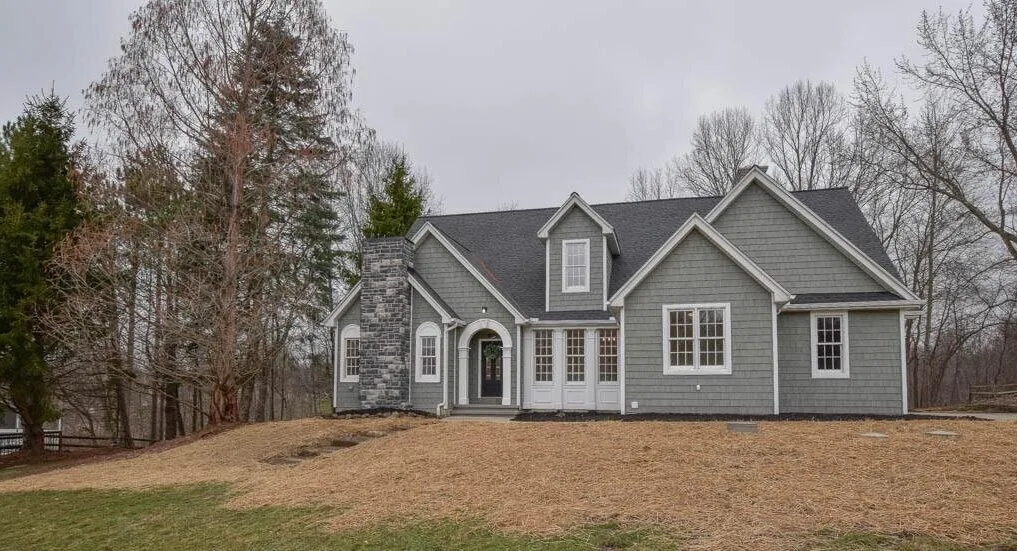
Louisville is still growing
Louisville added people between 2010 and 2020, going from 9,186 to 9,521 residents, which sets it apart from older Stark cities such as Canton and Alliance. Housing units rose from 3,995 to 4,235 over the same decade.
That growth shows in the housing mix:
- The median house was built in 1973.
- About 17% of homes predate 1940.
- About 68% are detached single-family homes, and owners occupy about two-thirds.
In a growing market, a sound house usually sells to an owner-occupant through an agent. The case for an as-is sale is strongest with the older homes, where deferred repairs add up.
From Lewisville to the Constitution Town
Louisville was settled on October 8, 1834, by Henry Lautzenheiser, a German immigrant, and Frederick Fainot, a French Huguenot. The town was first called Lewisville after Lautzenheiser’s son, and became Louisville when the post office opened in 1837, because Ohio already had a Lewisville.
The railway arrived in 1852 and helped Louisville outgrow its neighbor Harrisburg. It became a village in 1872 and a city in 1960. City Council named it “The Constitution Town” in 1957, and the Constitution Week celebration still runs each year around September 17.
The east branch of Nimishillen Creek runs through the city. If your house is near the creek, have your flood zone and any past water claims ready, because buyers and insurers will ask.
Louisville City Schools and Nimishillen Township
The Louisville City School District covers more ground than the city. It serves Louisville and most of Nimishillen Township, with four main schools:
| School | Grades |
|---|---|
| Louisville Elementary | Elementary |
| North Nimishillen Elementary | Elementary |
| Louisville Middle | Middle |
| Louisville High | High school |
St. Thomas Aquinas High School and Middle School is the Catholic option, along with Holy Cross Academy at the Saint Louis campus. The old Saint Louis School, open since 1852, closed after the 2018-2019 school year.
For a seller, the point is that a “Louisville” address may be inside the city or out in the township. The city line decides who issues permits and enforces zoning, while the school district is the same either way.
Pre-war houses, 1970s houses and inherited ones
Louisville’s housing spans more than a century, from homes built before 1940 to the roughly 240 housing units the city added between the 2010 and 2020 censuses.
Each type raises different questions when you sell:
- Older homes may need roof, electrical or plumbing updates before a buyer’s lender will approve a loan. Our guide to FHA appraisal repair requirements lists what usually gets flagged.
- Newer homes usually sell on condition and price, and they rarely need a cash buyer unless timing is the issue.
- Inherited homes of either age go through the county probate court in Canton.
Selling a parent’s house in Louisville
An inherited house is one of the most common reasons a family sells in a settled city like Louisville, where a home bought in the 1970s may have had one owner ever since.
An inherited Louisville house goes through the Stark County Probate Court in downtown Canton, about 7 miles away. Before anyone can sign a deed, the court has to give someone authority: an executor under a will, an administrator, or the heirs themselves through a certificate of transfer. The Stark County probate guide lays out the order of steps.
A few practical points for heirs:
- Keep paying the insurance and utilities, and tell the insurer the house is vacant.
- Don’t throw out papers until you’ve found the deed, the tax bills and any mortgage statements.
- Ask the probate attorney whether the will allows a sale without a separate court proceeding.
If taxes or a deadline are pushing the sale
A Louisville house behind on property taxes is handled by the Stark County Treasurer, which offers a 12- or 24-month delinquent tax contract depending on the balance. The full county process, including sheriff sales and the conveyance fee, is on our Stark County page.
If you need to sell before a move or a court date, the 3-step process shows how a closing date gets set around you.