
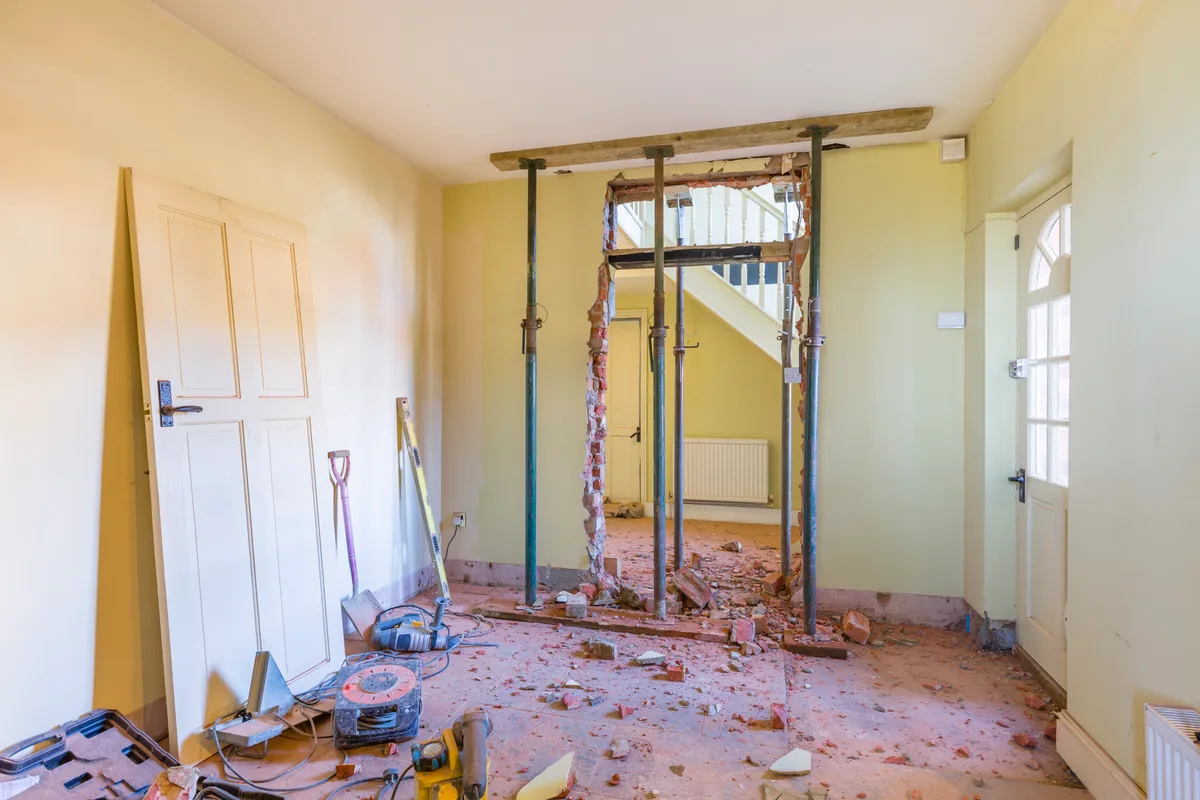
Common foundation trouble in older Akron and Canton houses
Northeast Ohio’s housing is old, and old basements move. Census estimates for 2020-2024 put about 34% of Akron’s housing units and about 41% of Canton’s in buildings from 1939 or earlier. Houses that age often have block or stone basement walls, and a century of wet seasons tests them.
The problems sellers describe most often:
- Bowed or bulging block walls, usually from soil pressure and water on the outside of the wall
- Stair-step cracks in block mortar, or horizontal cracks partway up the wall
- Settling that shows up as sloping floors, sticking doors, or cracks over doorways upstairs
- Wet basements, where water is a cause of the movement as much as a symptom
Not every crack is structural. Hairline shrinkage cracks in a poured wall are common. A horizontal crack with the wall pushing inward is a different matter, and that’s the kind a buyer’s engineer will flag.
What Ohio’s disclosure form asks about the structure
The Ohio Residential Property Disclosure Form, in the version effective June 2022, asks sellers directly about structural components. Question E covers “movement, shifting, deterioration, material cracks/settling” in the foundation, basement or crawl space, floors, or interior and exterior walls. Question D covers water leakage and excess moisture in the basement or crawl space, and Question K covers drainage, settling, grading and erosion. Each asks for repairs over the past five years.
Timing matters. Under R.C. 5302.30(K), a buyer who didn’t get the form before making the offer can rescind within three business days of receiving it, or of receiving an amendment, as long as it’s before closing and within 30 days of acceptance. A seller who discovers a crack and discloses it late can lose the deal outright.
Some sellers don’t fill out the form at all: estate fiduciaries, heirs who never lived in the house, and court-ordered sales among them. Even then, hiding a known defect is a separate legal risk. The disclosure form guide lists every exemption.
Mine subsidence: a local cause worth ruling out
Parts of all four counties sit over abandoned underground mines. ODNR’s map of abandoned underground mines shows them in 43 of Ohio’s 88 counties, Summit, Stark, Portage and Medina among them. One example on that map is the abandoned PPG limestone mine near Norton, more than 2,200 feet deep. The disclosure form itself points buyers to ODNR’s online map of known abandoned mines.
Insurance rules differ by county under Ohio Adm. Code 3901-1-48:
| County | Mine subsidence coverage |
|---|---|
| Stark | Included in homeowners policies (one of 26 required counties) |
| Summit, Portage, Medina | Insurers must offer it; the policyholder may decline |
Coverage is the lesser of the dwelling limit or $300,000, with a $250 to $500 deductible. If your house is in a mined area and you carry the coverage, talk to your insurer before you sell. A covered claim could change your plans entirely.
An engineer’s opinion versus a contractor’s bid
Before you decide anything, know who you’re asking. A foundation repair company inspects for free because it sells the fix, so its bid tells you what that company would do and charge. A licensed structural engineer charges for a visit, but the written opinion says what’s wrong, whether it’s still moving, and what repair would be adequate, without selling you the work.
For a sale, the engineer’s letter is often the more useful document. It answers the first question every buyer asks, gives contractors a common scope to bid on, and keeps a small problem from being treated like a large one.
Repair, credit, or sell as it stands
You have three realistic paths with a structural problem:
- Repair first. Get two or three bids, and favor a contractor whose warranty transfers to the next owner. Buyers and lenders feel better about a fixed wall with paperwork than about a promise.
- Disclose and negotiate. List the house with the problem disclosed and the bids attached, and expect buyers to ask for the repair cost plus a margin for the unknown.
- Sell as-is. A buyer who doesn’t need a lender’s approval can take the house with the wall as it is.
If the rest of the house is in good condition and you aren’t in a hurry, the first path often nets more. Where the foundation is one of several issues, or there’s no money for the repair, the third path avoids months of bids and permits. Water damage that led to the movement is covered on our fire or water damaged house page, and the as-is sale guide explains how disclosure and as-is clauses work together. When you want a number that already allows for the repair, tell us about the house.