
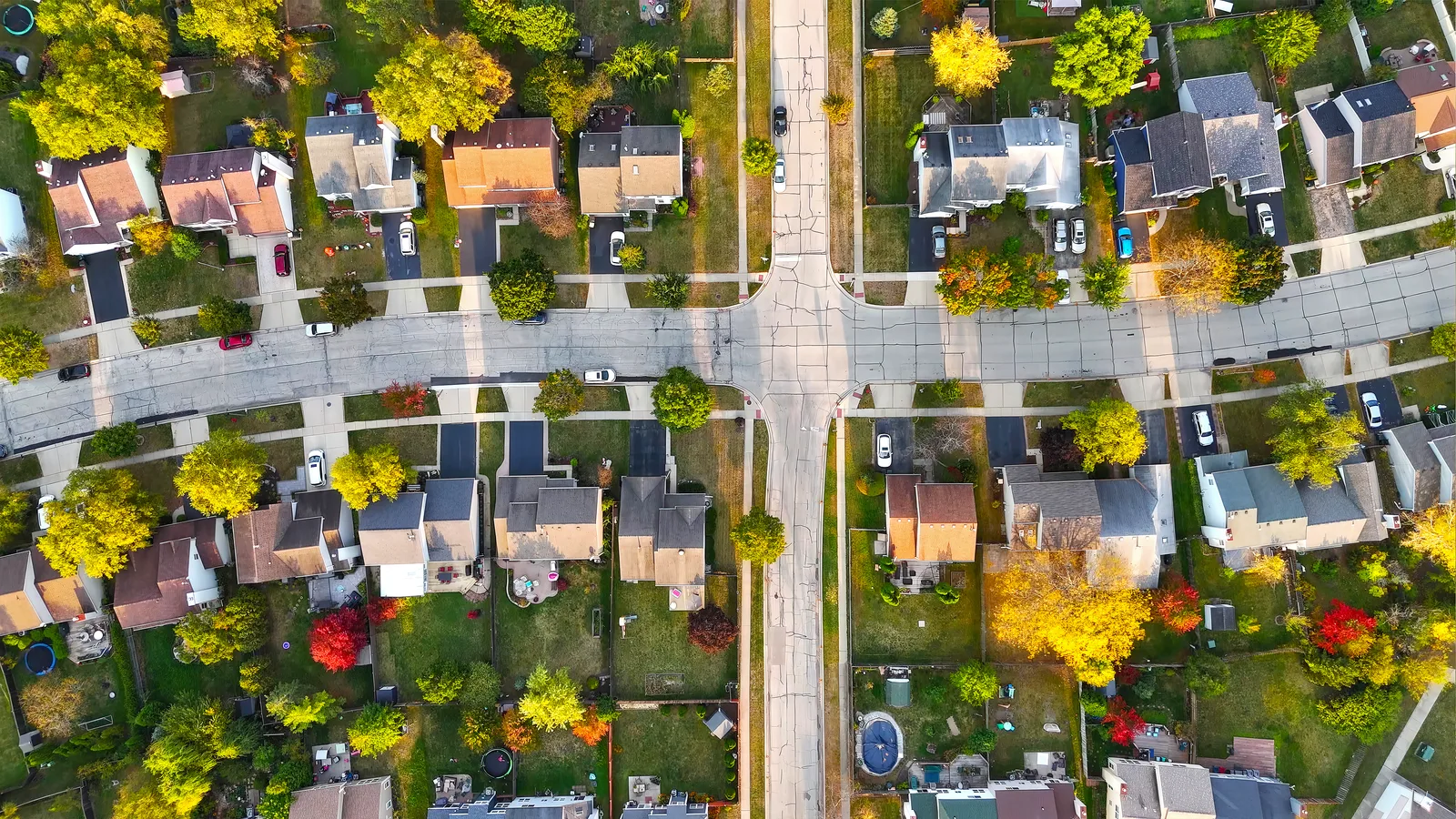
Three local governments share the valley
The Peninsula area is three governments: the village of Peninsula, Boston Township around it, and the village of Boston Heights on the eastern rim. Which one your house is in decides your zoning, your school district and who you call at closing.
Boston Township was organized on January 15, 1811, and James Stanford named it after Boston, Massachusetts. Peninsula incorporated in 1859 and is still legally part of the township. Boston Heights incorporated in 1924 and left the township by forming its own paper township.
Their housing differs sharply, by the Census Bureau’s 2020-2024 estimates:
| Peninsula village | Boston Township (incl. Peninsula) | Boston Heights | |
|---|---|---|---|
| Housing units | about 295 | about 666 | about 555 |
| Median year built | 1957 | 1964 | 1988 |
| Built 1939 or earlier | 38% | 24% | 20% |
| Mobile homes | 0% | 21% | 0% |
| Median home value (owner estimate) | $432,700 | $330,500 | $431,800 |
The national park owns most of the land
Cuyahoga Valley National Park is the biggest landowner here, which is why so few private homes remain. Congress created the Cuyahoga Valley National Recreation Area in the mid-1970s, and the Park Service bought most properties outright rather than buying scenic easements.
The effect on Boston Township was large:
- The township says its population fell about 30% as homes were acquired.
- By 2000, when the area became a national park, the federal government owned more than 80% of the township.
- In Peninsula, the park covers almost half of the village’s land area.
The township population was 1,401 in the 2020 census, and Peninsula’s was 536. With so little private land, a house that comes up for sale here is uncommon. A Peninsula home in good repair may well be worth listing for that reason, and we’ll tell you if we think so.
Peninsula: a canal port inside the park
Peninsula takes its name from a loop in the Cuyahoga River that forms a peninsula. Up to 2,000 men, many of them Irish Catholics, built the Ohio and Erie Canal through the township from 1825 to 1827. Hermon Bronson laid out the village in 1837.
At its canal-era peak the port had quarries, boatyards, mills, five hotels and 14 taverns. More than 20 sites in the village are on the National Register of Historic Places, including Bronson Memorial Church, first built as Bethel Church in 1835 and redesigned in Gothic Revival style in 1889.
The Valley Railway arrived in 1880. Passenger service ended in 1963 and the last freight train ran in 1985. The Park Service now owns the line, and the Cuyahoga Valley Scenic Railroad runs excursions on it.
With 38% of its homes built before 1940, Peninsula has many old houses: including canal-era and sandstone buildings. If yours needs more work than you want to take on, selling a house that needs work lays out the tradeoffs.
Boston Township: farms, quarries and manufactured homes
Outside Peninsula, Boston Township’s private land is a mix of older homes, former farms and manufactured homes. About 21% of housing in the township’s Census area is mobile homes, one of the highest shares in Summit County. Selling one has its own steps; see selling a mobile home.
The township’s history explains the mix. Four stone quarries came under the Cleveland Stone Company, the Cleveland-Akron Bag Company built a factory in Boston in 1899, and after the automobile arrived, farmland became residential streets such as Morris Acres, State Road Farms and Stine Road.
State Route 303 runs east-west through the township, with an I-271 exit at the Richfield border; the Ohio Turnpike crosses with no exit. In 2005 the trustees formed a Joint Economic Development District with Cuyahoga Falls, with sewer and water planned for the business corridor. Homes outside public lines rely on wells and septic, which Summit County inspects before a sale; the septic and well guide explains how.
Peninsula and Boston Township are in the Woodridge Local School District.
Boston Heights: newer homes on the eastern rim
Boston Heights is newer and almost entirely owner-occupied. Its median home was built in 1988, about 94% of occupied homes are owner-occupied, and only about 1% of units were vacant. The village covers about 7 square miles and is home to the headquarters of the furniture retailer Arhaus.
The village says its students attend Hudson schools, and the Nordonia Hills district also serves part of Boston Heights. Neighboring Hudson and Richfield have their own pages, and county-wide steps are on the Summit County page. When you want a number for a valley property, request a written offer.