
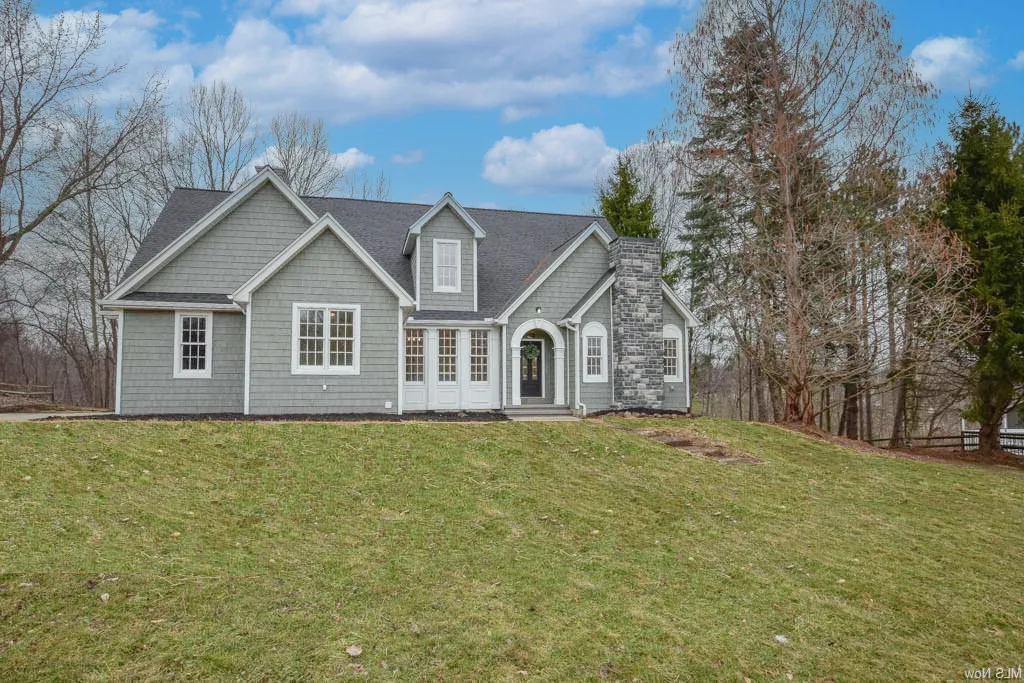
Cheese country on the Lorain County line
Litchfield takes its name from Litchfield, Connecticut, home of Judge Uriel Holmes Jr., the land speculator who bought this part of the Western Reserve just after the War of 1812. According to the township, nobody settled permanently in his time, even though he built three roads, and the land later reverted to Connecticut. Permanent settlement began in February 1830, when Cyrus Cook, his wife and child built a brush hut in the north part of the township; a group of Connecticut farm families followed that May. The township was organized in 1831, and it is the only Litchfield Township in Ohio.
In more recent history, Litchfield was known for dairy, specifically cheese. The township center is the unincorporated community of Litchfield, where the historical society built the current gazebo in Litchfield Circle Park to resemble the original wooden one from the 1900s. The society, incorporated in 1984, runs the Litchfield Historical Museum.
The township sits on Medina County’s western side, with Lorain County’s Grafton, Penfield and LaGrange townships along its north and west. York Township is to the east, Chatham to the south, and Spencer touches the southwest corner. There is no city or village inside Litchfield.
Litchfield homes in numbers
Litchfield is a township of owner-occupied single-family homes, according to the Census:
- About 95% single-family detached, and about 2% mobile homes.
- About 93% owner-occupied.
- Median year built: 1988. About 9% date from 1939 or earlier.
- Median home value, as owners estimate it: about $271,100, lower than the eastern townships like Hinckley or Sharon.
That price point is relevant when a house needs work. On a $270,000 rural home, a new septic field, a well pump and a roof can take a large share of what you’d clear on a sale, and a buyer’s lender may want them done before closing.
Zoning certificates, and why to sort them out first
Litchfield is a zoned township, and its zoning office is direct about one thing: call the zoning inspector before you build or erect any structure, including houses, barns, decks, pools and fences. A zoning certificate issued after work has started is charged a double fee, and permit fees aren’t refundable.
For a seller, that rule matters because rural properties pick up structures over the years: a pole barn, a deck, a pool, a fence along the road. If any of them went up without a certificate, a buyer’s attorney or lender may ask, and fixing it costs more after the fact. You can:
- Call the zoning inspector and find out what’s on file for your parcel.
- Apply for any missing certificates before you list.
- Or sell as-is to a buyer who accepts the property as it stands.
Our guide on selling a house with open permits covers each route. The zoning commission meets the second Tuesday of each month at the Litchfield Town Hall, 9256 Norwalk Road.
Rural services in Litchfield
Fire and rescue come from Litchfield Fire and Rescue, a volunteer department of about 20 members under Chief Tim Keck, at 9487 Norwalk Road. Students attend the Buckeye Local School District, shared with Liverpool and York townships. There’s no township income tax.
Rural Litchfield homes may rely on a well and a septic system. The Medina County Health Department does not require a septic inspection before a sale, but buyers’ lenders often do, and the department recommends having septic and well systems evaluated before purchase. If yours has failed, see selling a house with septic problems.
Selling your Litchfield house
If your house is in good shape and you aren’t on a deadline, a local agent will likely get you more than a cash offer. If it needs septic, roof or structural work, has unpermitted buildings, or belongs to an estate, we’ll buy it as-is and let you choose the closing date. Medina County’s probate court and $3 per $1,000 conveyance fee are explained on our Medina County page. Request a written offer to compare.