
Buzzards, ledges and a wrinkled township
Hinckley Township is famous for a bird. Every March 15, buzzards return to Hinckley in large flocks, and the township has marked the day since 1957. On Buzzard Day, as many as 50,000 people come to watch at the Hinckley Reservation of the Cleveland Metroparks.
The reservation is the township’s other landmark. At more than 3,200 acres, it’s the third-largest Metroparks reservation, with Hinckley Lake, Whipp’s Ledges rising 350 feet above the lake, and Worden’s Ledges, where Noble Stuart carved figures into the rock in the 1940s. Hinckley Township transferred its Rising Valley land off Newton Road to the Metroparks, which now runs public trails there.
The land itself shaped Hinckley’s slow start. The township’s own history says Hinckley holds 1,133 acres more than a standard 16,000-acre township “due to the hills and valleys and generally ‘wrinkled’ surface.” Judge Samuel Hinckley of Northampton, Massachusetts, the original proprietor, predicted his land would someday sell for $10 an acre, and Hinckley stayed wilderness well after its neighbors were settled. The township was established in 1825.
Rural zoning and what it means for a sale
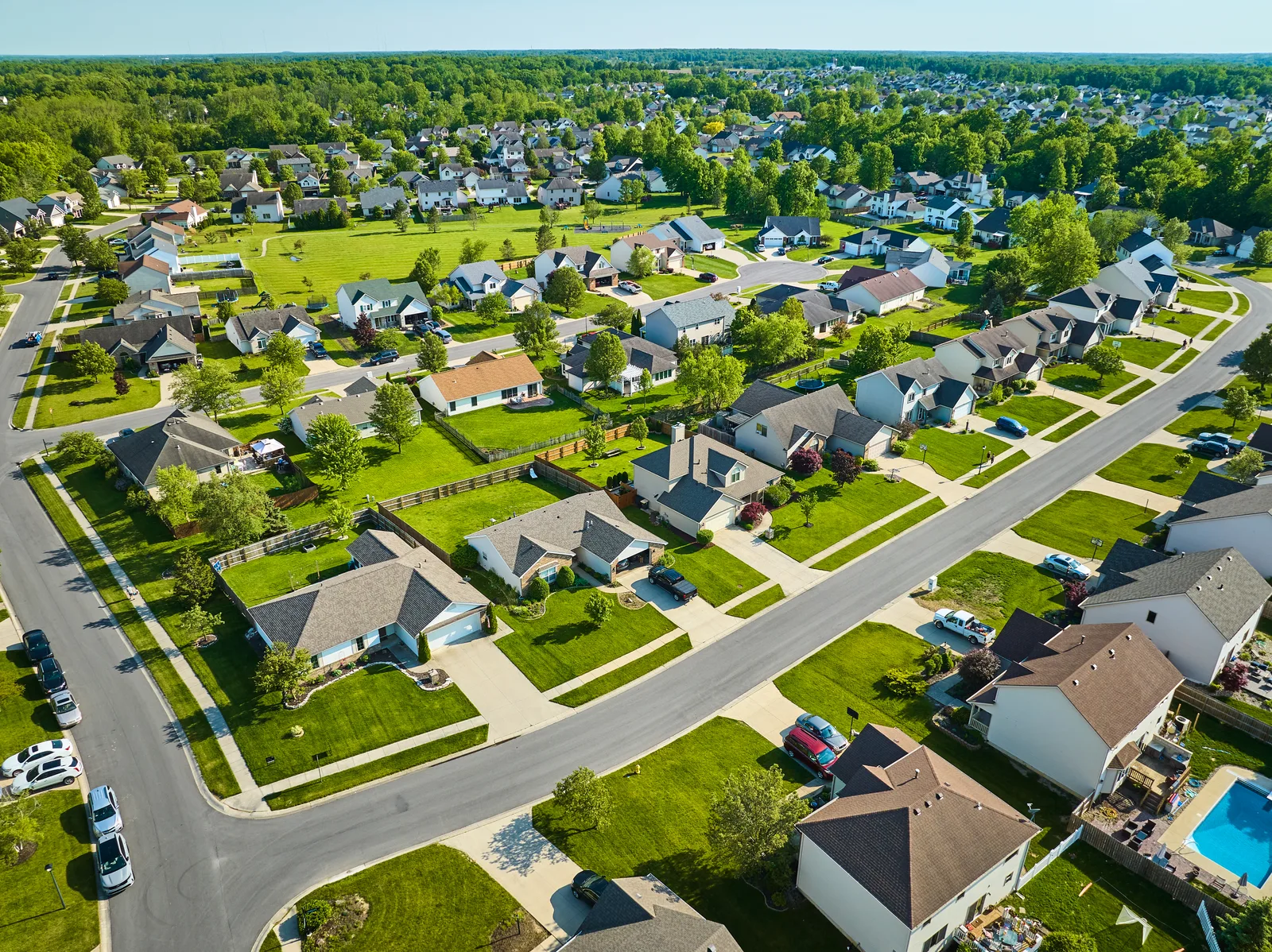
Hinckley has no city or village inside it, so the township’s zoning governs nearly every lot. Its residential districts are:
- R-1, intended for low-density development “that will promote the continuation of the predominately rural residential character.”
- R-2, allowing somewhat higher density.
Business districts include a Historic Town Center district around the center at Ridge Road (State Route 3) and Center Road (State Route 303), meant to keep a small-town setting. The township’s historical society works from an 1846 Greek Revival house at 1634 Center Road, and the township is updating its comprehensive plan in 2025 and 2026.
For a seller, rural zoning means two things. First, buyers pay for land and privacy, which supports value. Second, accessory buildings, pole barns, additions and pools need township zoning permits, and a structure built without one can come up when a buyer’s attorney or lender reviews the property. See selling a house with open permits.
Hinckley homes by the numbers
The Census describes a township of owner-occupied single-family homes:
- About 99% single-family detached, and about 95% owner-occupied.
- Median year built: 1984. About 6% date from 1939 or earlier.
- Median home value, as owners estimate it: about $443,500, among the highest in Medina County.
Much of Hinckley is rural, and a house here may rely on a private well and a septic system. The Medina County Health Department doesn’t require a septic inspection before a sale, but a buyer’s lender often will, and the department recommends having both the septic and well evaluated before purchase. A failing leach field on a large-lot home can mean a costly replacement; selling a house with septic problems explains your choices. Radon is another common test request on a rural Ohio sale, covered in our radon guide.
A cash sale is not always right in Hinckley
With values this high, a well-kept Hinckley house is usually worth listing. On a $450,000 home, the difference between a retail sale and a cash offer can be large, and we’ll show you that math honestly.
Selling direct makes sense when the house is the exception: a 1960s ranch that hasn’t been updated, a home with failing septic or a wet basement, an estate where heirs want a clean, fast sale, or a property full of belongings after decades in one family. In those cases, you skip repairs, cleaning and showings, pay no commission, and close on the date you choose. Estates and county fees are covered on our Medina County page, and you can request a written offer to compare against a listing.