
Hartville runs its own government
Hartville became an incorporated village in 1951, and that makes it different from Uniontown and Greentown, its neighbors in Lake Township. It sits inside the township’s boundaries but governs itself.
| Who | What they handle |
|---|---|
| Mayor | General village management; appoints boards and commissions |
| Village Council (6 members) | Legislation; meets the 2nd and 4th Mondays at 6:30 p.m. |
| Fiscal Officer | Finances and the village income tax |
| Police Department | 24-hour village police |
| Building and Zoning | Permits and zoning at Village Hall |
| Street and wastewater departments | Village streets and the wastewater treatment plant |
Village Hall is at 202 W. Maple Street. For a seller, that means zoning questions, permits and sewer bills go to the village, while deeds, property taxes and estates still go to Stark County. Stark County’s own sale rules are summarized on our Stark County page.
From the Hartville Hotel to the Marketplace
Hartville grew up at a crossroads. John Morehart, an early settler, built the Hartville Hotel as an inn and tavern on the north side of the square; the village calls it its oldest standing structure, dated to 1829 or 1838. The name is likely a blend of Morehart’s surname and that of fellow settler John Willis, and the town was first platted in 1851.
Today the village draws visitors to a business campus about 2 miles from downtown. It grew from a livestock auction founded in 1939, and the Hartville Kitchen opened there in 1966 as a 75-seat restaurant. Hartville Hardware moved into a 305,000-square-foot store in 2012, and the indoor-outdoor Marketplace and Flea Market sits behind it.
Downtown is smaller and older, with shops in original buildings, including a chocolate maker in an 1898 building on South Prospect Avenue. Hartville was a dry town until 2012.
Village homes, condos and rentals
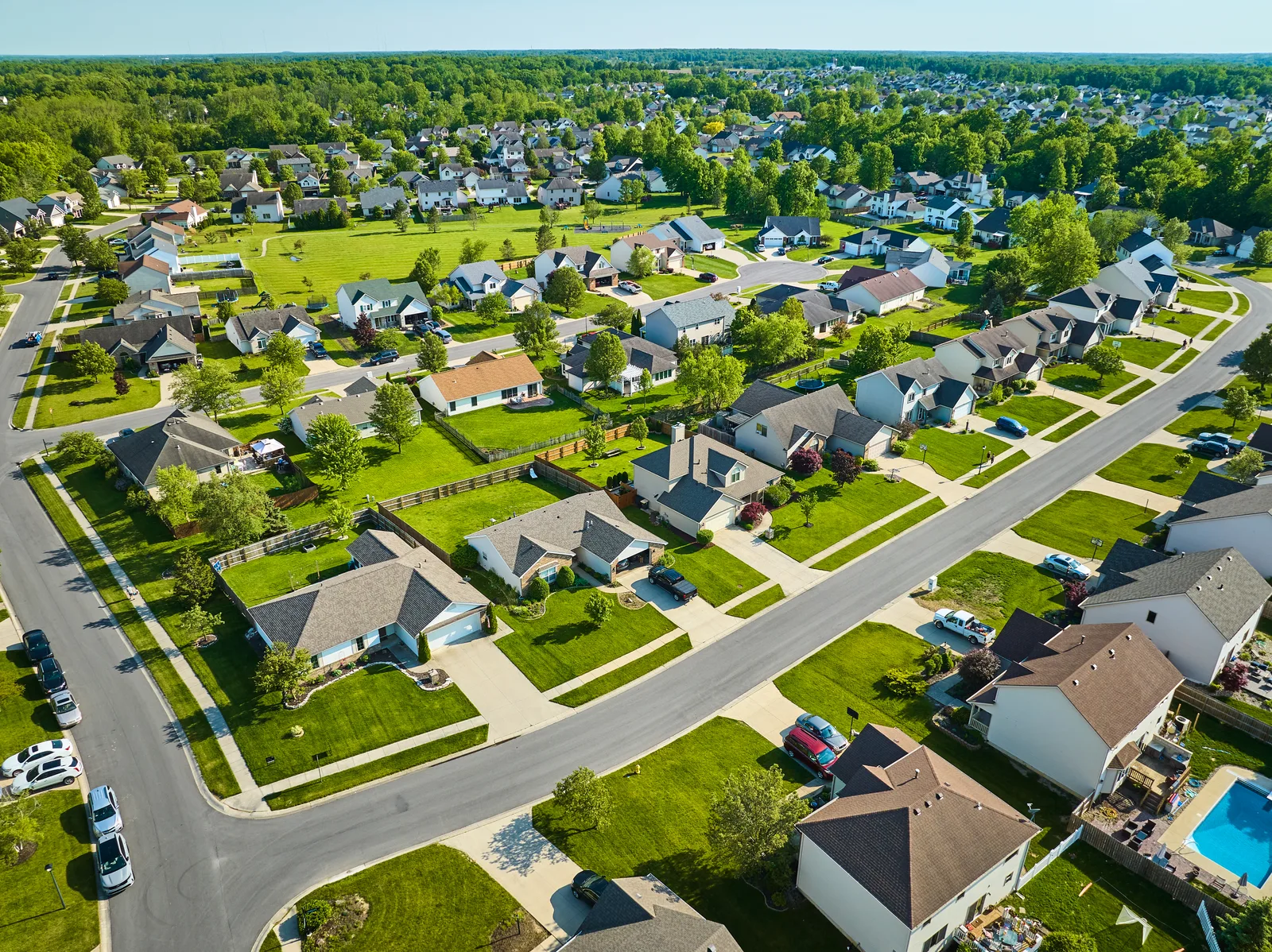
Hartville’s housing is a mix of village-era homes and later development. Census estimates show:
- Median year built: 1977, with about 13% built before 1940.
- About 61% of homes are detached single-family houses, a lower share than the surrounding township’s 81%.
- Owners occupy about 64%, and vacancy is close to zero.
The higher share of attached homes and rentals means more Hartville sales involve a condo association or a tenant. If you’re selling a rented house, selling a house with tenants covers leases and notice, and the security deposit guide explains what happens to the deposit.
Village sewer service and other closing details
Because Hartville runs its own wastewater plant and sewer billing, a Hartville sale has one more utility to close out than a house in the unincorporated township, which may be on septic.
Before closing:
- Ask the village for a final sewer reading and balance.
- Check with Village Hall for any open zoning or permit issues on additions, decks or fences.
- Gather your deed, tax bill and any condo documents.
Unpaid utility charges can be certified to the tax bill as a lien. The water bill liens guide explains how that is cleared at closing.
Hartville schools and when to list
Hartville students attend Lake Local Schools, along with students from the rest of Lake Township, Uniontown and Greentown. The district recently consolidated into Lake Primary, Lake Elementary and Lake Middle/High School.
With almost no vacancy, a Hartville house in good condition should sell well with an agent, and we’ll tell you that. A direct sale is worth comparing for an older village home that needs major work, a rental you’re ready to stop managing, or an inherited house nobody can get to. You can ask for a written offer either way.